
Chicken Wellington with Pampas Puff Pastry
Method
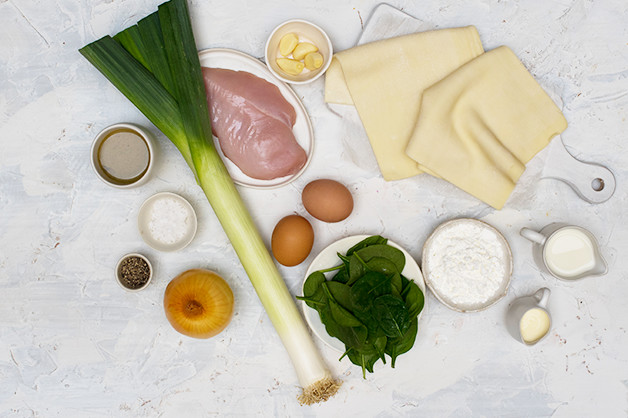
Step 1:
Dice the chicken and marinade with Hot English Mustard and American Mustard. Season with salt, pepper and olive oil, then set aside. By adding the oil to the mixture, it allows the marinade to soak into the chicken quickly.
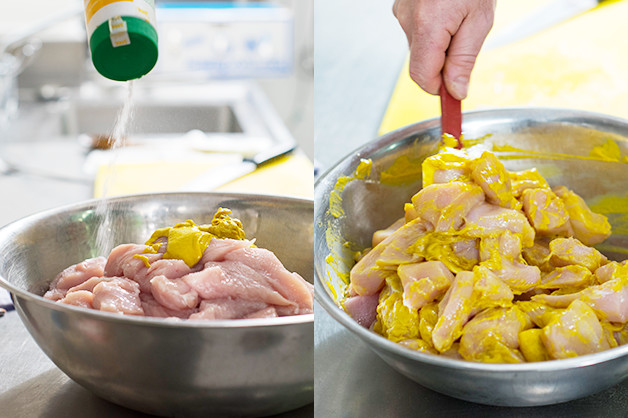
Step 2:
Place the mushrooms in a food processor and set to a high speed until it combines. Pour into a pot on the stovetop and place on a low heat.
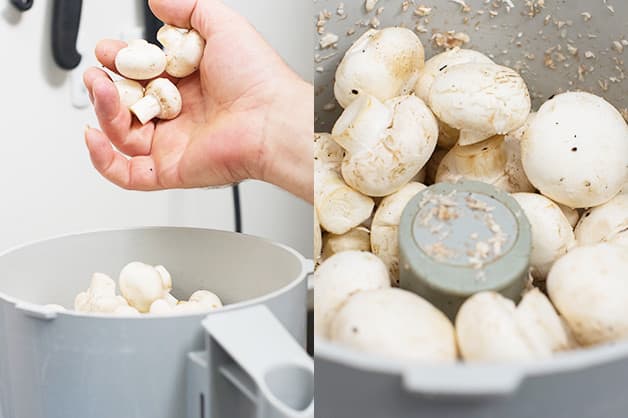
Step 3:
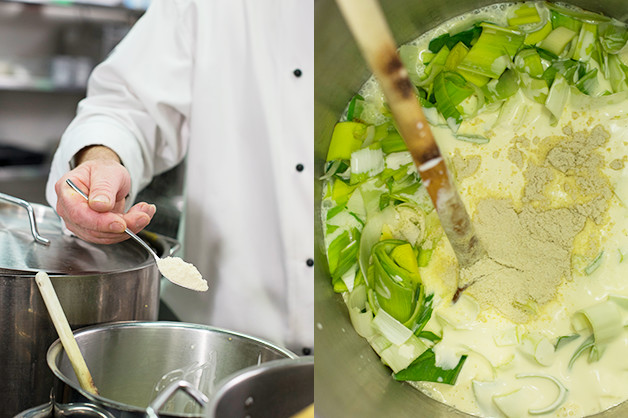
To make the white sauce, fry off the leek that has been peeled and washed, then add the cream and vegetable powder. Add a pinch of salt and pepper and thicken the mixture with the White Wings Cornflour and water. Stir until all the ingredients have combined.
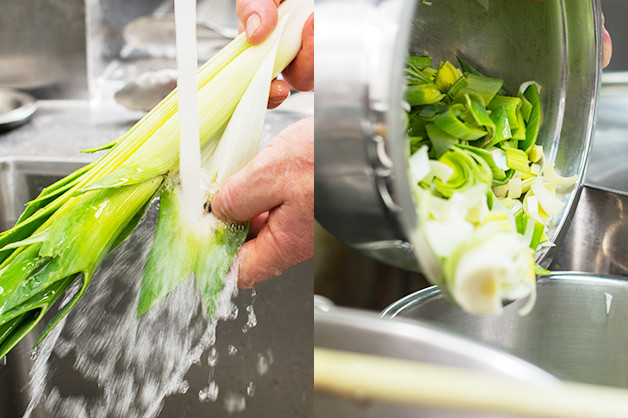
Step 4:
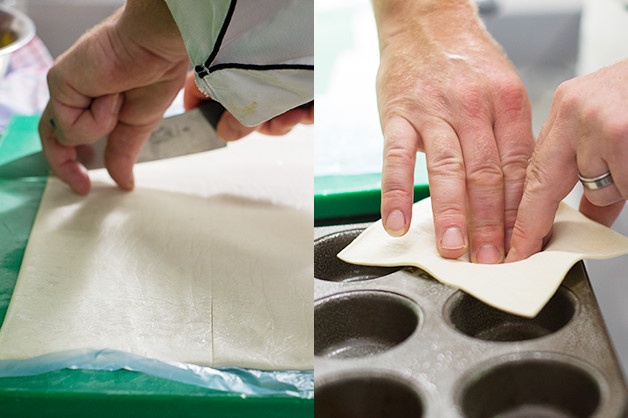
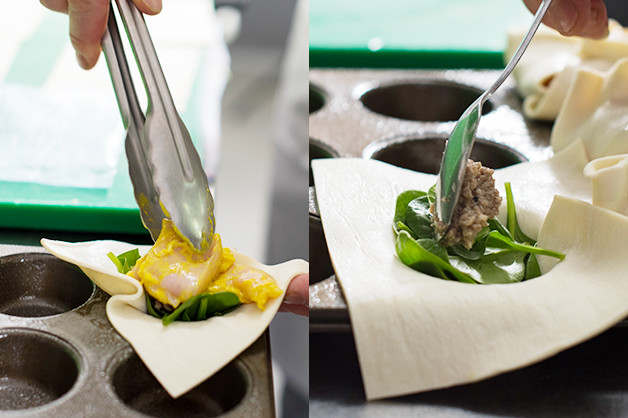
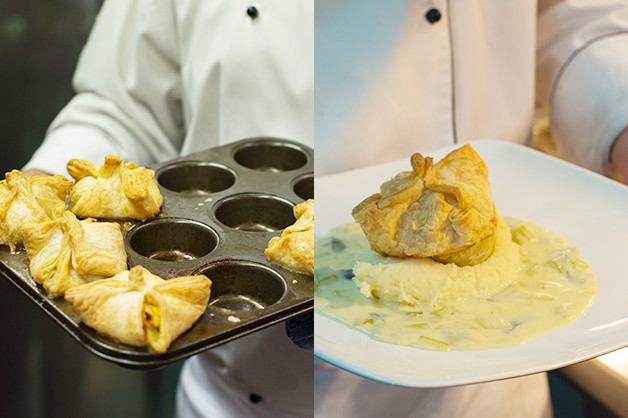
Spray a cupcake tray with olive oil, then cover each by placing with a square of Pampas Frozen Puff Pastry (measurements may differ depending on the baking tray). Fill the pastry with fresh spinach leaves, followed by the mushroom puree and slices of raw chicken. Close the pastry by pinching the ends together and bake at 175 degrees Celcius until they are golden brown.
Discover our range quality pastry from Goodman Fielder Food Service, your trusted wholesale pastry supplier.
Step 5:
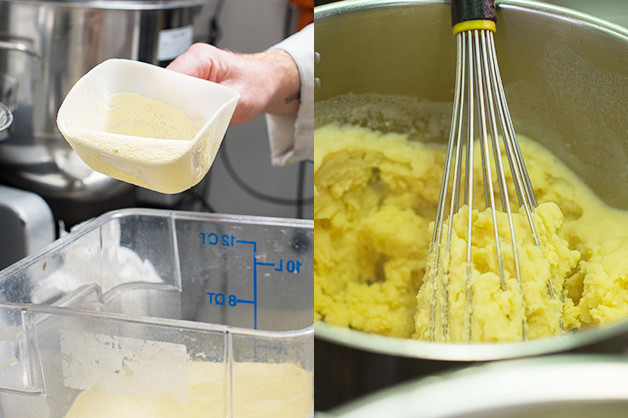
While the chicken wellingtons cook, make a batch of mash potato. At the hospital, we use potato powder to ensure consistency and because we cook in large bulks. To create this, boil a pot of water and add the potato powder as per the instructions. Mash until the mixture combines.
Step 6:
For plating, pour the white sauce on the plate, followed by a serving of mash potato. Place the chicken wellington on-top and serve.
Ingredients
| Ingredient Name | Qty Purchased | Cost of Goods | Qty Used in Recipe | Total Cost |
|---|---|---|---|---|
| kg | $ | kg | $ 0.00 | |
| mL | $ | mL | $ 0.00 | |
| kg | $ | kg | $ 0.00 | |
| g | $ | g | $ 0.00 | |
| each | $ | each | $ 0.00 | |
| mL | $ | mL | $ 0.00 | |
| g | $ | g | $ 0.00 | |
| each | $ | each | $ 0.00 | |
| mL | $ | mL | $ 0.00 | |
| g | $ | g | $ 0.00 | |
| g | $ | g | $ 0.00 | |
| g | $ | g | $ 0.00 | |
| g | $ | g | $ 0.00 | |
| kg | $ | kg | $ 0.00 |
WHAT IS A RECIPE CALCULATOR?
A recipe calculator works out what a dish costs to make and what it needs to sell for to turn a profit. Some tools under that name are really a recipe converter, turning ounces and teaspoons into metric, or a recipe multiplier that scales quantities up or down, or a nutrition calculator returning the energy and carbohydrate count per serve. Ours is a recipe cost calculator. Enter your ingredient costs and servings, and you get a total cost, a cost per serve, and the margin behind your selling price.
HOW TO USE OUR RECIPE CALCULATOR
Enter your recipe name, method and serving size, and the number of servings the recipe makes.
Select “+ Add Ingredient” to build your ingredient list, then enter the quantity purchased and cost of goods for each item.
Enter the quantity your recipe actually uses for each ingredient, in grams, millilitres or each.
Select Calculate to see your total cost across the batch, plus the same figure with GST added and your cost per serve. This is where the calculator divides your total batch cost by your number of servings, converting it into a cost per portion.
Enter a Selling Price per serve to see your Food Gross Profit, Food Markup percentage and Total Generated Profit.
WHY FOODSERVICE BUSINESSES USE OUR RECIPE CALCULATOR
Cafes and quick service kitchens change their menus often, and costing a new dish properly before it launches matters more than costing it quickly. Catering and events businesses price the same recipe at different scales throughout the year, a function for ten one week and an event for two hundred the next. Enter the servings for each job, and the calculator handles that recipe scaling without you reworking your ingredient list from scratch.
Bakeries producing large batches need to know the per-unit cost still holds as bakery ingredient prices shift. Contract caterers working to a fixed per-meal budget, such as aged care or education providers, can check a recipe against that budget before it goes into a wider meal planner or seasonal menu.
Across all of these, the value is the same. You get a cost per serve and a margin you can trust, built from your actual supplier pricing rather than an estimate.
Browse our recipes for menu inspiration, then cost them here before you commit to a price.
WHAT MAKES OUR RECIPE CALCULATOR DIFFERENT
Most recipe cost calculators are standalone software with no link to where you actually buy. Ours sits within Goodman Fielder Food Service, a foodservice supplier. Once you’ve priced a recipe and know your numbers, you’re already talking to the team that supplies the ingredients themselves. If a margin looks tighter than expected, that’s a conversation about ingredient pricing you can have straight away.
If you want to work through pricing on a specific dish or menu, our team can help. Get in touch today.