
Sriracha
Method
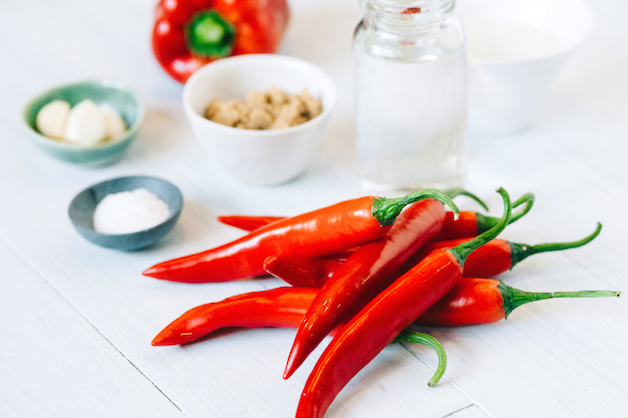
For this recipe, we’re going to split up each of the various elements.
Step 1 – Chop Ingredients
Chop the chilli and capsicum retaining seeds and membranes, and place them into a blender with garlic, brown sugar, salt, and water. Blend until smooth, pulsing several times to start.
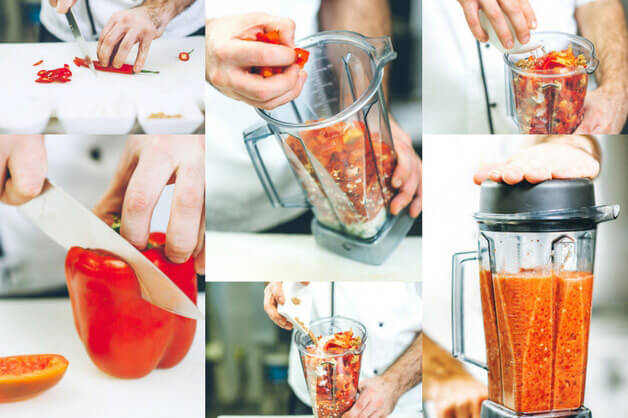
Step 2 – Transfer the Puree
Transfer the puree into a large glass container such as a large jar or pitcher.
Cover your container with plastic wrap and place it into a cool, dark location for 3 to 5 days, stirring once a day.
The mixture will begin to bubble and ferment. Scrape down the sides during each stirring.
Rewrap the jar or pitcher after every stirring and return to a cool, dark place until your mixture is bubbly.
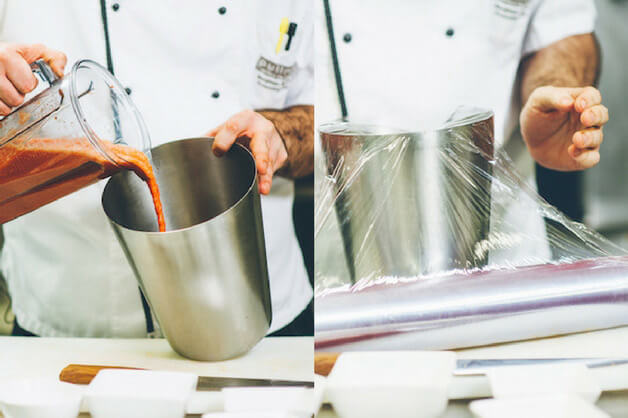
Step 3 – Strain Mixture
Pour the fermented mixture back into your blender with vinegar; then blend until smooth.
Strain the mixture through a fine mesh strainer into a saucepan, pushing as much of the pulp as possible through the strainer into the sauce.
You can discard the remaining pulp, seeds, and skin left in strainer.
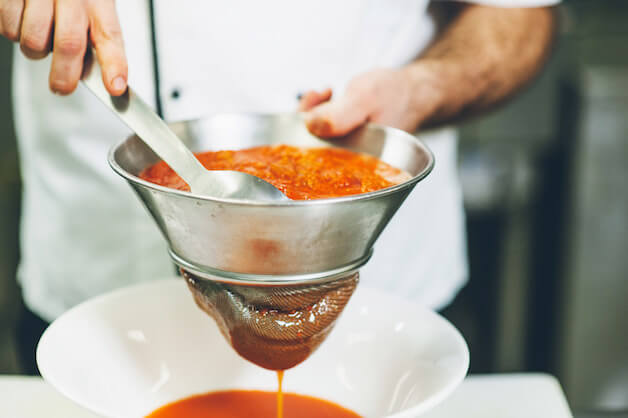
Step 4 – Bring It Back To The Boil
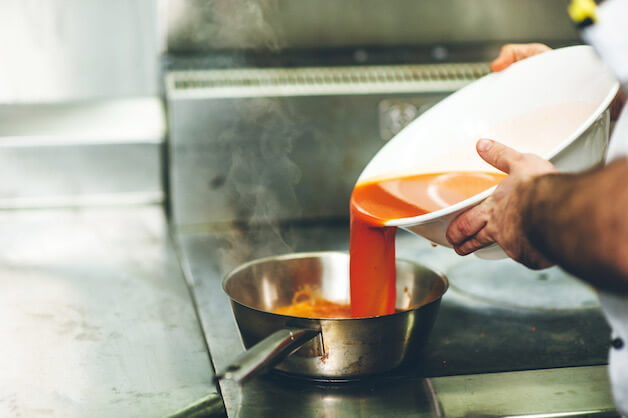
Place a saucepan on a burner and bring your sauce to a boil, stirring often, until it reduces to your desired thickness. This should take about 5 to 10 minutes.
You can skim the foam if desired.
Step 5 – Cool To Room Temperature
Remove the saucepan from the heat and let your sauce cool back to room temperature. The sauce will thicken a little when you cool it down.
Step 6 – Transfer To Jars
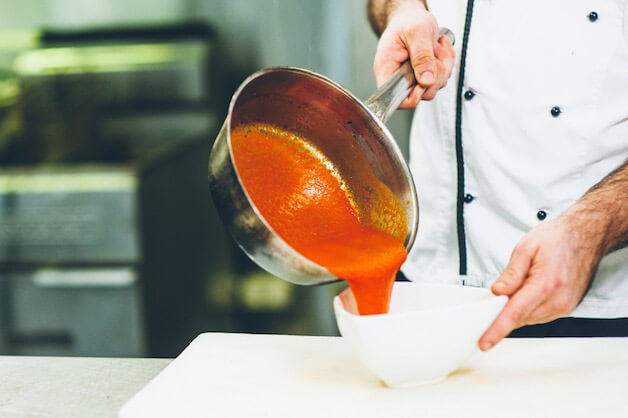
Transfer your sauce to jars or bottles and refrigerate.
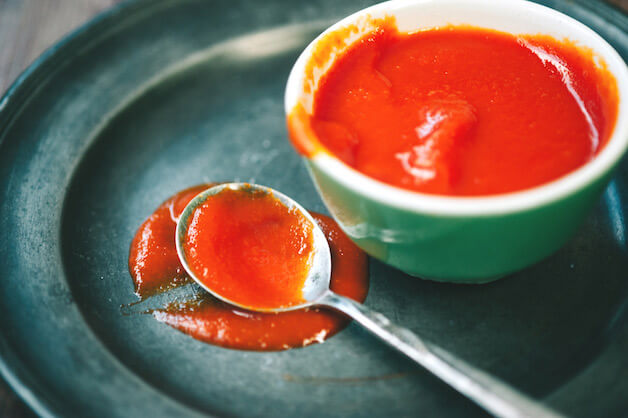
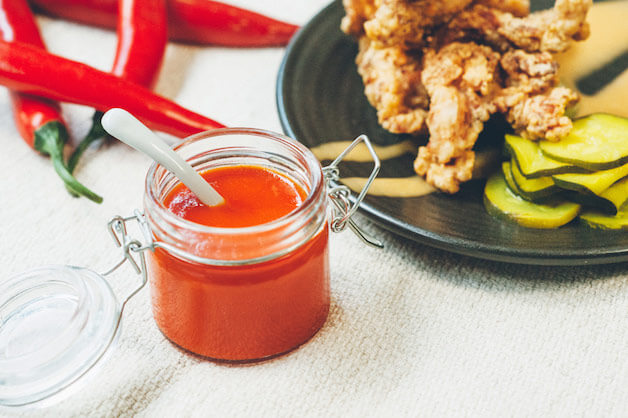
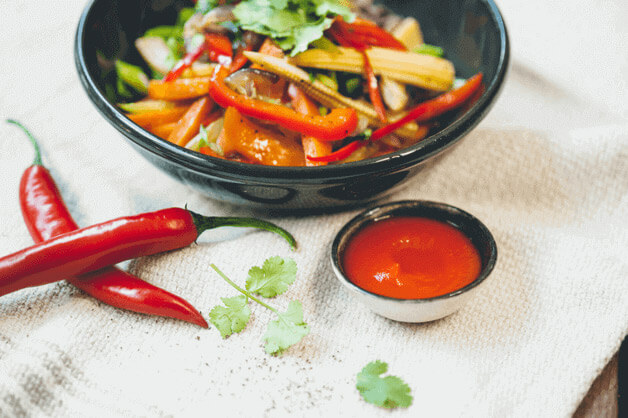
This sauce is a great spicy addition in a commercial kitchen. To get you started, here I’ve served it up with fresh prawns, a vegetable stir fry, fried chicken and a crispy-skin salmon with soba noodles which just goes to show it’s versatility. See what you can come up with.


Ingredients
| Ingredient Name | Qty Purchased | Cost of Goods | Qty Used in Recipe | Total Cost |
|---|---|---|---|---|
| g | $ | g | $ 0.00 | |
| g | $ | g | $ 0.00 | |
| each | $ | each | $ 0.00 | |
| g | $ | g | $ 0.00 | |
| g | $ | g | $ 0.00 | |
| mL | $ | mL | $ 0.00 | |
| mL | $ | mL | $ 0.00 |
WHAT IS A RECIPE CALCULATOR?
A recipe calculator works out what a dish costs to make and what it needs to sell for to turn a profit. Some tools under that name are really a recipe converter, turning ounces and teaspoons into metric, or a recipe multiplier that scales quantities up or down, or a nutrition calculator returning the energy and carbohydrate count per serve. Ours is a recipe cost calculator. Enter your ingredient costs and servings, and you get a total cost, a cost per serve, and the margin behind your selling price.
HOW TO USE OUR RECIPE CALCULATOR
Enter your recipe name, method and serving size, and the number of servings the recipe makes.
Select “+ Add Ingredient” to build your ingredient list, then enter the quantity purchased and cost of goods for each item.
Enter the quantity your recipe actually uses for each ingredient, in grams, millilitres or each.
Select Calculate to see your total cost across the batch, plus the same figure with GST added and your cost per serve. This is where the calculator divides your total batch cost by your number of servings, converting it into a cost per portion.
Enter a Selling Price per serve to see your Food Gross Profit, Food Markup percentage and Total Generated Profit.
WHY FOODSERVICE BUSINESSES USE OUR RECIPE CALCULATOR
Cafes and quick service kitchens change their menus often, and costing a new dish properly before it launches matters more than costing it quickly. Catering and events businesses price the same recipe at different scales throughout the year, a function for ten one week and an event for two hundred the next. Enter the servings for each job, and the calculator handles that recipe scaling without you reworking your ingredient list from scratch.
Bakeries producing large batches need to know the per-unit cost still holds as bakery ingredient prices shift. Contract caterers working to a fixed per-meal budget, such as aged care or education providers, can check a recipe against that budget before it goes into a wider meal planner or seasonal menu.
Across all of these, the value is the same. You get a cost per serve and a margin you can trust, built from your actual supplier pricing rather than an estimate.
Browse our recipes for menu inspiration, then cost them here before you commit to a price.
WHAT MAKES OUR RECIPE CALCULATOR DIFFERENT
Most recipe cost calculators are standalone software with no link to where you actually buy. Ours sits within Goodman Fielder Food Service, a foodservice supplier. Once you’ve priced a recipe and know your numbers, you’re already talking to the team that supplies the ingredients themselves. If a margin looks tighter than expected, that’s a conversation about ingredient pricing you can have straight away.
If you want to work through pricing on a specific dish or menu, our team can help. Get in touch today.