
Slow Braised Pork Cutlet Glazed with Apple Cider Vinegar served with Goat Cheese Tortellini
Method
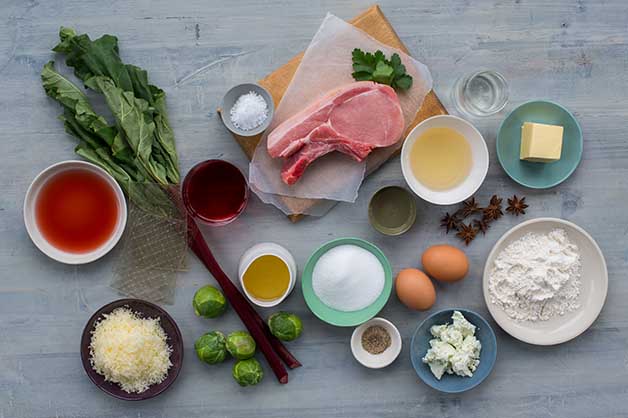
Step 1
To create your glaze, pour the Cornwells Apple Cider Vinegar into a pot, along with the gin, caster sugar, water and star anise. Bring the ingredients to a boil, then set aside.
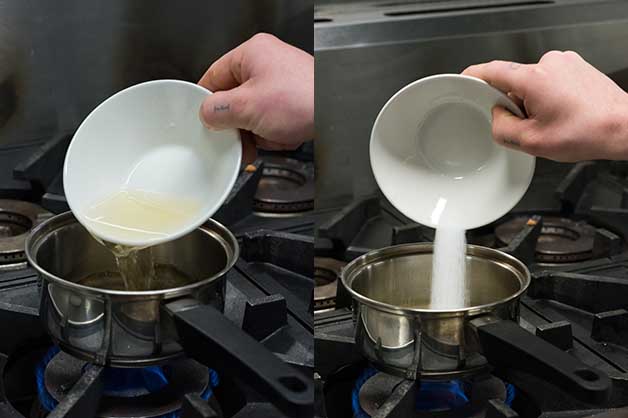
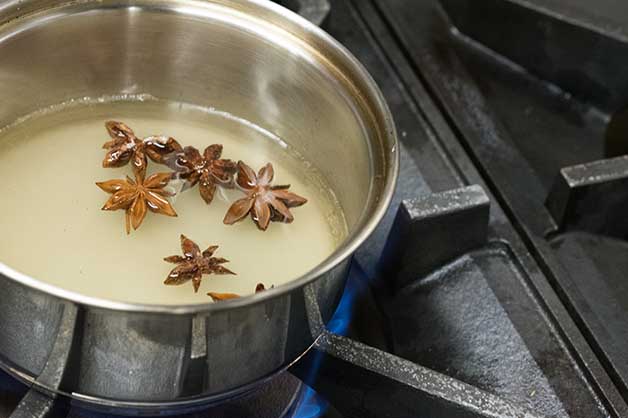
Step 2
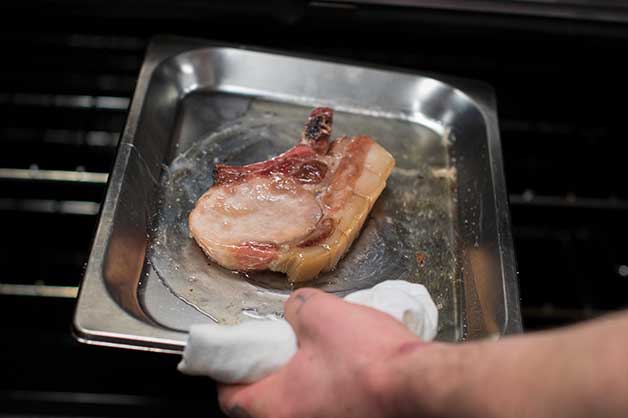
French and clean your pork cutlets. Coat them with 25 ml of Simply Vegetable Oil before pouring the apple cider glaze over-the-top. Leave the cutlets in the syrup for some time, to allow them to soak up the juices. Then, grill the pork cutlets on both sides until it is well done. Place in a baking dish and further cook it in a preheated 70 degrees oven for one hour.
Explore Goodman Fielder Food Service’s range of premium bulk vegetable oil.
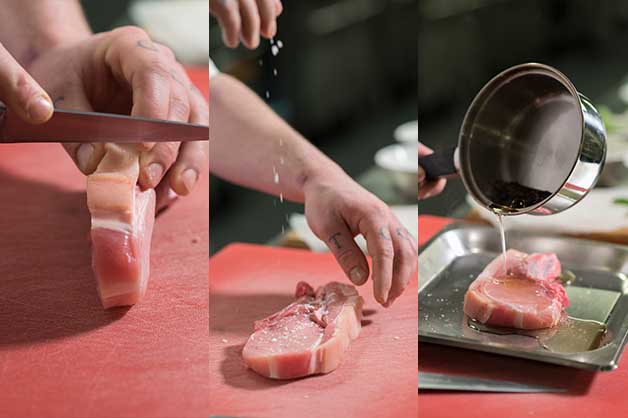
Step 3
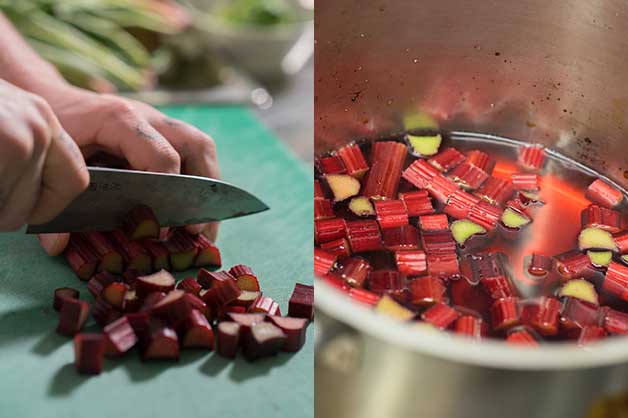
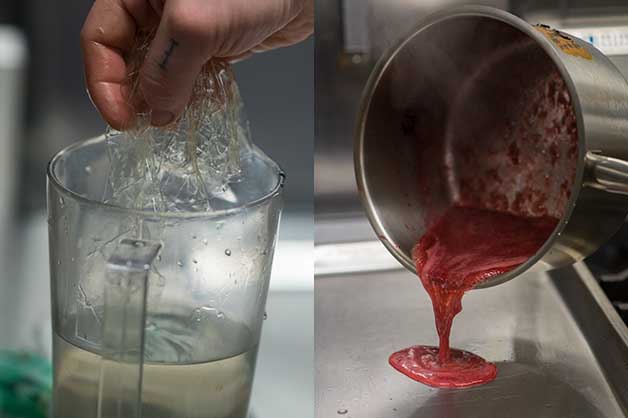
For your rhubarb jelly, chop the rhubarb into small pieces and place in a mixing bowl. In a separate bowl, soak the gelatine leaves for 10 minutes, then add to the mixture. In a saucepan, pour in the cranberry juice, sherry vinegar and the rhubarb mixture. Cook on a low heat for eight to 10 minutes.
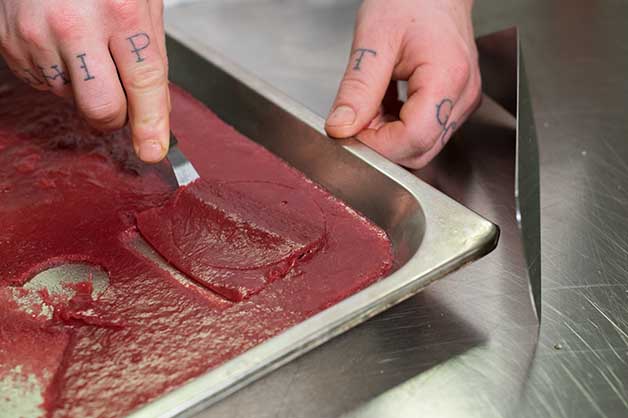
Once the mixture has softened, pour it into a flat tray and place in the fridge. Once it has set, cut circles out of the jelly and set aside for plating.
Step 4
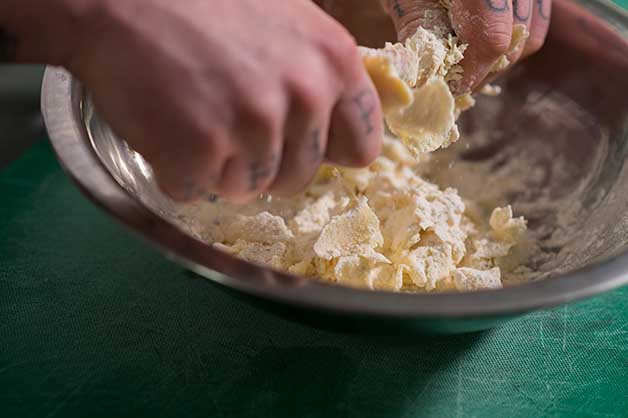
For your cheddar sable, combine 140 grams White Wings Plain Flour, butter and cheddar. By using your fingers, combine the ingredients until it creates a breadcrumb texture. Pour the crumbs into a baking tray and place them in a preheated oven at 170 degrees for 13 minutes.
Step 5
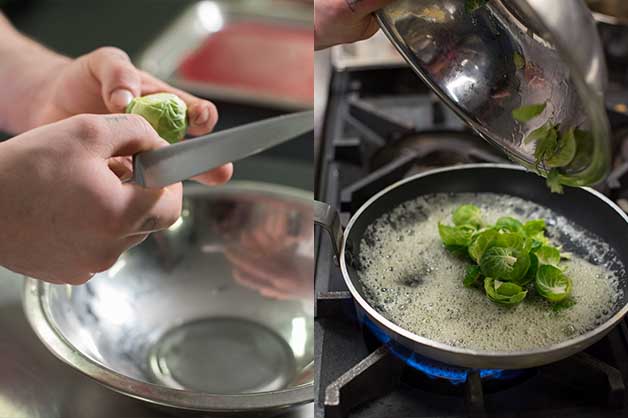
Peel the individual leaves off each Brussel sprout, then blanch in boiling water. Once they have softened, dress the leaves with clarified butter and salt and pepper.
Step 6
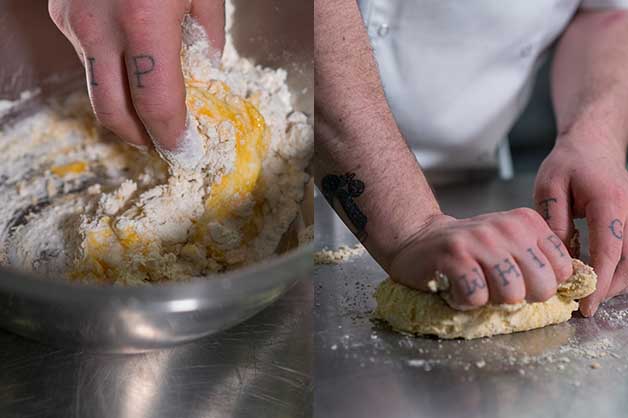
To create your tortellini, combine a whole egg, an additional egg yolk, one cup of White Wings Plain Flour and 40 ml of water. Slowly work the ingredients together until it forms a pasta dough. Rest the dough in the fridge for one hour.
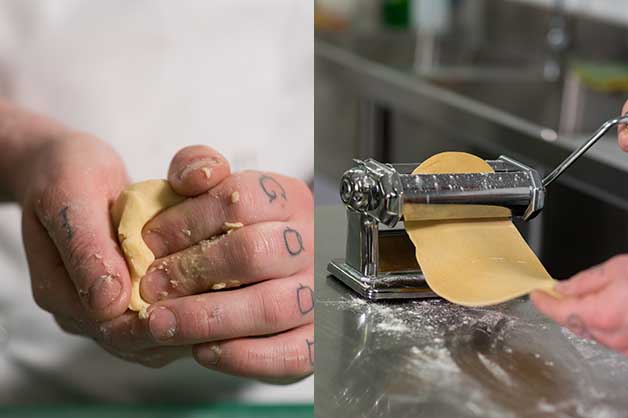
Once the pasta has rested, roll it out on a machine to a thickness of your preference. Repeat this process seven times. Using a large cutter, make a number of tortellini pasta slips, then place a teaspoon of goat cheese in the middle. Damp one side of the pasta then fold it over and join the ends together to form a shape of a tortellini.
Place the pasta in a pot of boiling water, and cook them until they become soft.
Step 7
To serve, place the circular rhubarb jelly on a plate, then add the tortellini over-the-top. Place the pork cutlet in the middle of the dish and randomly place the Brussel sprouts on top, along with a layer of the cheddar crumbs. Add a touch of salt and pepper, then serve.
Ingredients
| Ingredient Name | Qty Purchased | Cost of Goods | Qty Used in Recipe | Total Cost |
|---|---|---|---|---|
| mL | $ | mL | $ 0.00 | |
| mL | $ | mL | $ 0.00 | |
| each | $ | each | $ 0.00 | |
| mL | $ | mL | $ 0.00 | |
| g | $ | g | $ 0.00 | |
| each | $ | each | $ 0.00 | |
| mL | $ | mL | $ 0.00 | |
| g | $ | g | $ 0.00 | |
| mL | $ | mL | $ 0.00 | |
| g | $ | g | $ 0.00 | |
| g | $ | g | $ 0.00 | |
| each | $ | each | $ 0.00 | |
| each | $ | each | $ 0.00 | |
| g | $ | g | $ 0.00 | |
| g | $ | g | $ 0.00 | |
| g | $ | g | $ 0.00 | |
| g | $ | g | $ 0.00 | |
| each | $ | each | $ 0.00 | |
| g | $ | g | $ 0.00 |
WHAT IS A RECIPE CALCULATOR?
A recipe calculator works out what a dish costs to make and what it needs to sell for to turn a profit. Some tools under that name are really a recipe converter, turning ounces and teaspoons into metric, or a recipe multiplier that scales quantities up or down, or a nutrition calculator returning the energy and carbohydrate count per serve. Ours is a recipe cost calculator. Enter your ingredient costs and servings, and you get a total cost, a cost per serve, and the margin behind your selling price.
HOW TO USE OUR RECIPE CALCULATOR
Enter your recipe name, method and serving size, and the number of servings the recipe makes.
Select “+ Add Ingredient” to build your ingredient list, then enter the quantity purchased and cost of goods for each item.
Enter the quantity your recipe actually uses for each ingredient, in grams, millilitres or each.
Select Calculate to see your total cost across the batch, plus the same figure with GST added and your cost per serve. This is where the calculator divides your total batch cost by your number of servings, converting it into a cost per portion.
Enter a Selling Price per serve to see your Food Gross Profit, Food Markup percentage and Total Generated Profit.
WHY FOODSERVICE BUSINESSES USE OUR RECIPE CALCULATOR
Cafes and quick service kitchens change their menus often, and costing a new dish properly before it launches matters more than costing it quickly. Catering and events businesses price the same recipe at different scales throughout the year, a function for ten one week and an event for two hundred the next. Enter the servings for each job, and the calculator handles that recipe scaling without you reworking your ingredient list from scratch.
Bakeries producing large batches need to know the per-unit cost still holds as bakery ingredient prices shift. Contract caterers working to a fixed per-meal budget, such as aged care or education providers, can check a recipe against that budget before it goes into a wider meal planner or seasonal menu.
Across all of these, the value is the same. You get a cost per serve and a margin you can trust, built from your actual supplier pricing rather than an estimate.
Browse our recipes for menu inspiration, then cost them here before you commit to a price.
WHAT MAKES OUR RECIPE CALCULATOR DIFFERENT
Most recipe cost calculators are standalone software with no link to where you actually buy. Ours sits within Goodman Fielder Food Service, a foodservice supplier. Once you’ve priced a recipe and know your numbers, you’re already talking to the team that supplies the ingredients themselves. If a margin looks tighter than expected, that’s a conversation about ingredient pricing you can have straight away.
If you want to work through pricing on a specific dish or menu, our team can help. Get in touch today.