
Chocolate Brownies with Salted Caramel & Biscuit Crumb
Method
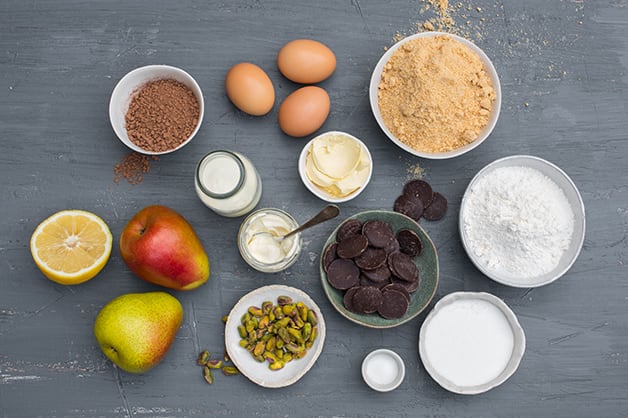
Step 1:
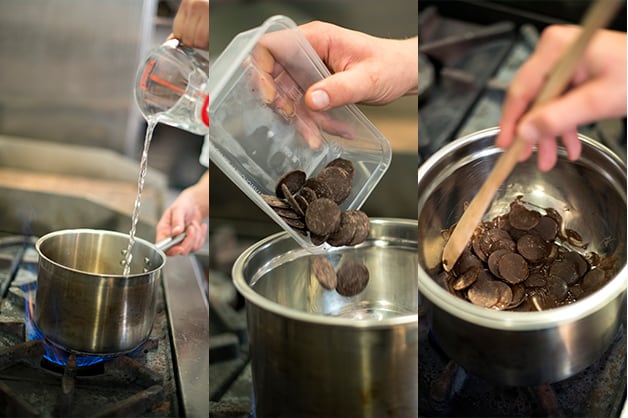
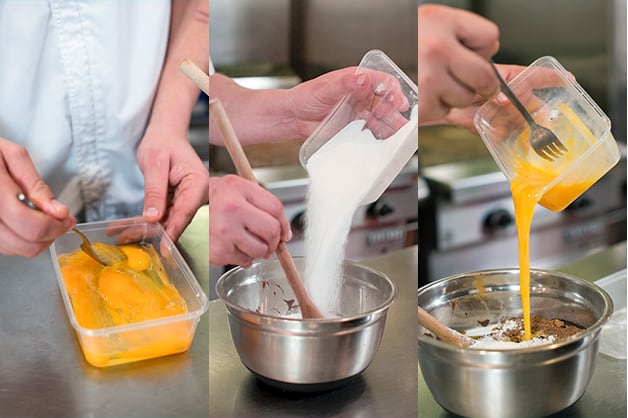
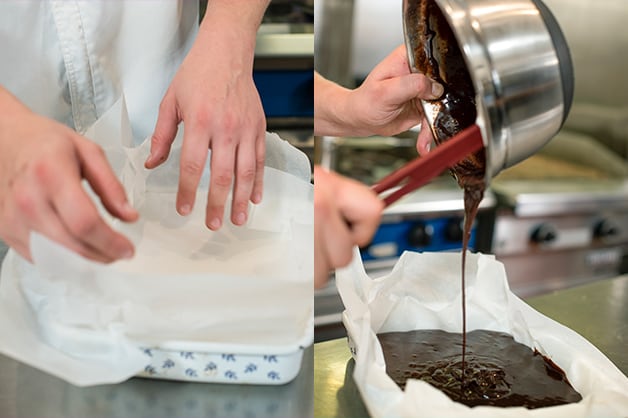
Chocolate brownies: To start, place a saucepan on the stove and add 500ml of water, then place a stainless steel bowl on-top and add the chocolate buttons. Stir until the chocolate melts. In another bowl, crack the eggs and give them a light whisk. Add the sugar to the melted chocolate, followed by the melted butter, cocoa powder and White Wings Plain Flour and eggs. Mix it until the ingredients are well combined. To finish it off, add a handful of chocolate buttons into the mixture. Line a 20cm x 30cm baking tin and pour in the mixture. Place in a preheated oven at 165 degrees Celsius for 45 minutes. Once the brownie has baked, allow it to cool in the tin before slicing them into even squares.
Step 2:
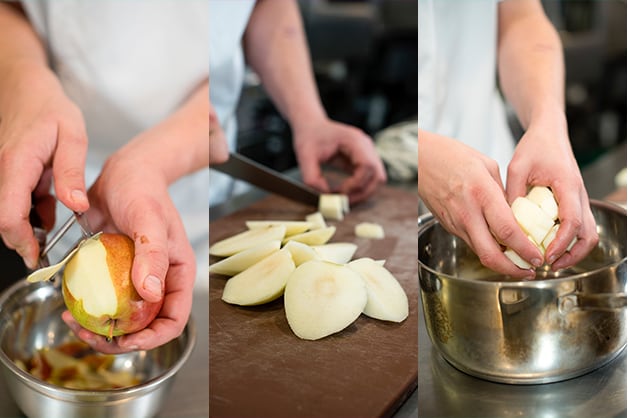
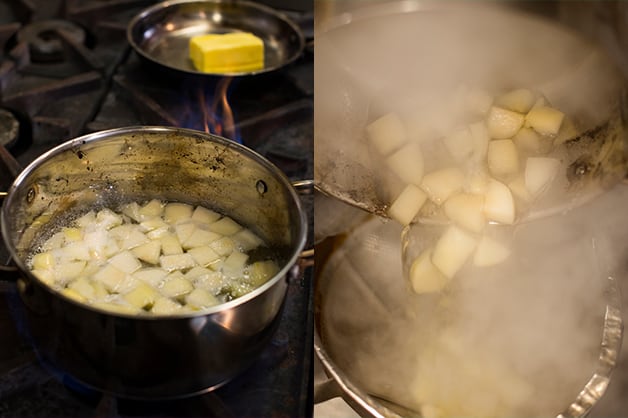
Poached pear: Peel each pear from the stem down and slice into cubes, then sprinkle each pear with lemon juice. In a pot, combine the pears with 500ml of water, 680 grams of sugar, half a lemon juice. Next, bring the pears to a boil by increasing the heat to high and allowing them to simmer for five minutes. Once the pears begin to simmer, take off the heat and drain the liquid. Put aside for plating.
Step 3:
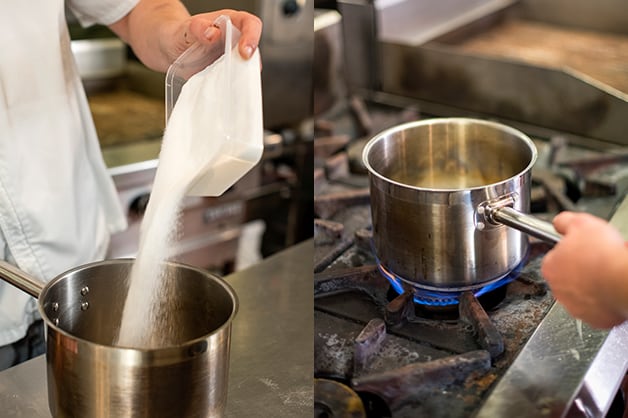
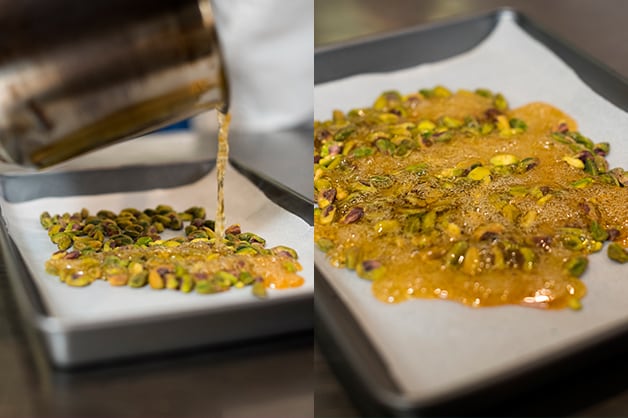
Pistachio praline: Place a lightly greased sheet of baking paper onto a tray and lay out the pistachios. On the stove, heat 100g of caster sugar with 100ml of water on a medium heat until the sugar dissolves and the liquid turns a deep brown. Then, pour the liquid over the pistachios and set aside to cool down. Once the praline has cooled down, shatter the praline using a hard solid object.
Step 4:
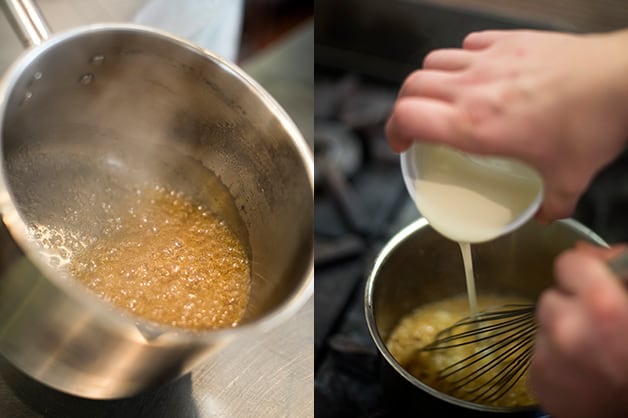
Salted caramel: Tip 250g of caster sugar and 100ml of water into a saucepan and place it on a medium heat to dissolve the sugar. Do not stir the sugar as this will cause the sugar to stick and crystalise into lumps. Instead, simply agitate the sugar occasionally using the end of a wooden spoon, just to ensure the sugar melts evenly. Once the sugar has melted, turn up the heat and allow to bubble for five minutes until it turns into caramel. Whisk some butter cubes into the melted caramel, then add the double cream and a pinch of salt, then allow to cool.
Step 5:
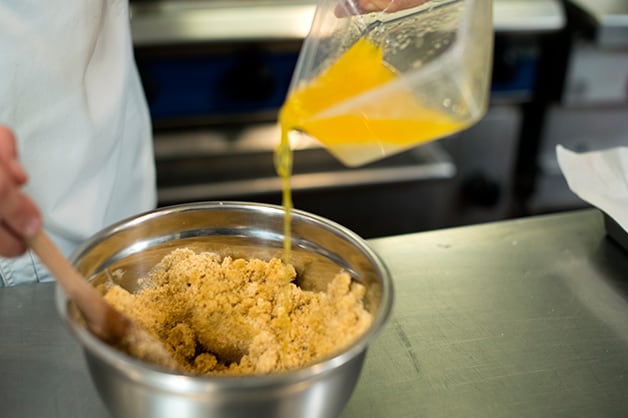
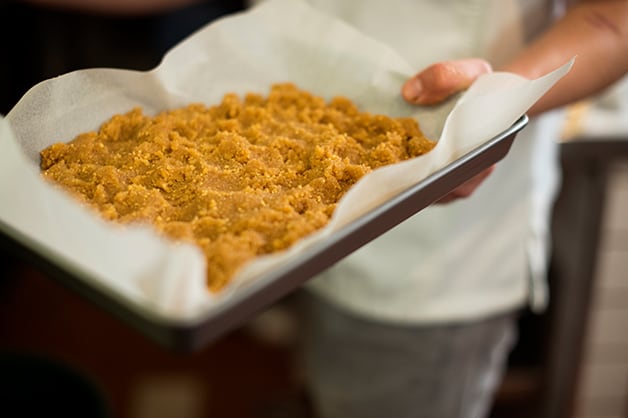
Biscuit crumb: Combine the White Wings Biscuit Mix with 100ml of melted margarine, 475ml of water and 50g of sugar. Using a mixer and dough hook, blend the ingredients together on a low speed until all ingredients combine. Then, pour the mix into a lined tray and press firmly together using your fingers. Place it in the oven at 170 degrees Celcius for 15 minutes, then into the fridge to cool down. Once it has cooled down, break the biscuit to create a crumb.
Step 6:
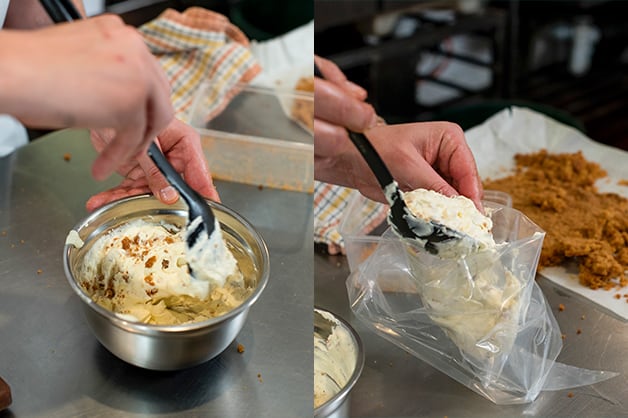
Biscuit cream: Combine the cream and half a serving of the cooled down biscuit. Then, scope into a piping bag.
Step 7:
To serve: Create a bed of salted caramel on the plate, then place the brownie on-top, followed by the biscuit cream. Top the dessert with the praline and biscuit crumb.
Ingredients
| Ingredient Name | Qty Purchased | Cost of Goods | Qty Used in Recipe | Total Cost |
|---|---|---|---|---|
| g | $ | g | $ 0.00 | |
| mL | $ | mL | $ 0.00 | |
| g | $ | g | $ 0.00 | |
| L | $ | L | $ 0.00 | |
| g | $ | g | $ 0.00 | |
| each | $ | each | $ 0.00 | |
| g | $ | g | $ 0.00 | |
| mL | $ | mL | $ 0.00 | |
| g | $ | g | $ 0.00 | |
| each | $ | each | $ 0.00 | |
| each | $ | each | $ 0.00 | |
| g | $ | g | $ 0.00 | |
| g | $ | g | $ 0.00 | |
| mL | $ | mL | $ 0.00 | |
| g | $ | g | $ 0.00 | |
| mL | $ | mL | $ 0.00 |
WHAT IS A RECIPE CALCULATOR?
A recipe calculator works out what a dish costs to make and what it needs to sell for to turn a profit. Some tools under that name are really a recipe converter, turning ounces and teaspoons into metric, or a recipe multiplier that scales quantities up or down, or a nutrition calculator returning the energy and carbohydrate count per serve. Ours is a recipe cost calculator. Enter your ingredient costs and servings, and you get a total cost, a cost per serve, and the margin behind your selling price.
HOW TO USE OUR RECIPE CALCULATOR
Enter your recipe name, method and serving size, and the number of servings the recipe makes.
Select “+ Add Ingredient” to build your ingredient list, then enter the quantity purchased and cost of goods for each item.
Enter the quantity your recipe actually uses for each ingredient, in grams, millilitres or each.
Select Calculate to see your total cost across the batch, plus the same figure with GST added and your cost per serve. This is where the calculator divides your total batch cost by your number of servings, converting it into a cost per portion.
Enter a Selling Price per serve to see your Food Gross Profit, Food Markup percentage and Total Generated Profit.
WHY FOODSERVICE BUSINESSES USE OUR RECIPE CALCULATOR
Cafes and quick service kitchens change their menus often, and costing a new dish properly before it launches matters more than costing it quickly. Catering and events businesses price the same recipe at different scales throughout the year, a function for ten one week and an event for two hundred the next. Enter the servings for each job, and the calculator handles that recipe scaling without you reworking your ingredient list from scratch.
Bakeries producing large batches need to know the per-unit cost still holds as bakery ingredient prices shift. Contract caterers working to a fixed per-meal budget, such as aged care or education providers, can check a recipe against that budget before it goes into a wider meal planner or seasonal menu.
Across all of these, the value is the same. You get a cost per serve and a margin you can trust, built from your actual supplier pricing rather than an estimate.
Browse our recipes for menu inspiration, then cost them here before you commit to a price.
WHAT MAKES OUR RECIPE CALCULATOR DIFFERENT
Most recipe cost calculators are standalone software with no link to where you actually buy. Ours sits within Goodman Fielder Food Service, a foodservice supplier. Once you’ve priced a recipe and know your numbers, you’re already talking to the team that supplies the ingredients themselves. If a margin looks tighter than expected, that’s a conversation about ingredient pricing you can have straight away.
If you want to work through pricing on a specific dish or menu, our team can help. Get in touch today.